 Design Trends
The Lighting Trend Worth Following
Fewer fixtures, placed lower, switched separately. The most useful shift in residential lighting in a decade is a subtraction rather than an addition.
For about twenty years the default residential lighting scheme has been a regular grid of recessed downlights, set out by an electrician to a spacing rule, on one switch. It is efficient, it is cheap to install, and it produces a room that feels like a supermarket aisle at every hour of the day.
The shift now underway is a reduction. Fewer fittings, positioned for specific tasks rather than for coverage, lit at lower level, and controlled in layers. It is not a style. It is a return to how rooms were lit before recessed fittings got cheap.
Why the grid fails
A regular downlight grid produces flat, even illumination from above. That is exactly right for a workshop and exactly wrong for a living room, for three reasons.
- It removes shadow. Depth is read from the gradient between light and dark. Remove the gradient and the room reads as flat, and therefore smaller.
- It lights the floor. Most of the light lands on carpet, which is the surface you are least interested in seeing.
- It backlights faces. Overhead light drops shadow into eye sockets and under chins, which is why nobody looks well in a downlit room.
The four-layer approach
Plan light as four separate, separately switched layers. Almost no domestic room needs all four, and almost every room benefits from at least three.
- Task. Light where hands work: under kitchen cabinets, at a desk, beside a bed, over a mirror. The single highest-value layer and the one most often missing.
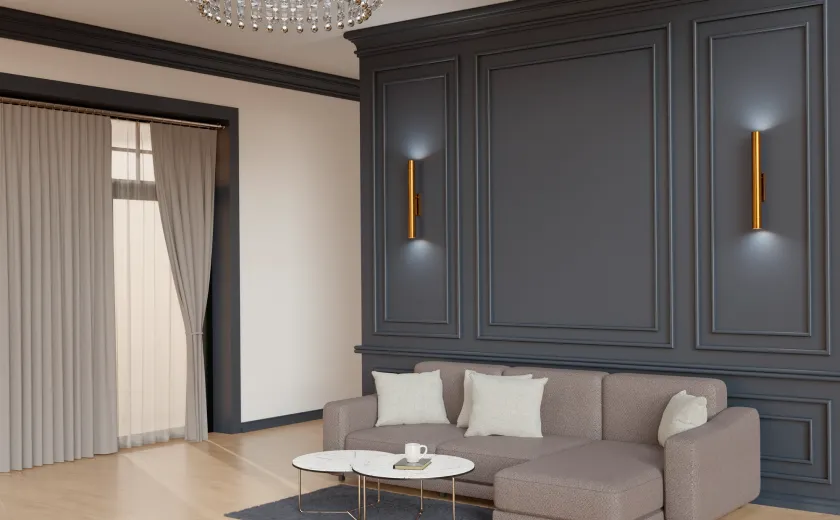
- Accent. A small number of narrow-beam fittings aimed at something specific: a painting, a bookcase, a fireplace, a plant. Not a grid. Four or five per room at most.
- Ambient. The soft fill that stops the contrast becoming harsh. Often a wall washer, a cove, or simply a lamp with a pale shade.
- Decorative. The fitting you actually look at: the pendant, the sconce, the table lamp. It contributes light almost incidentally.
Height is the trend
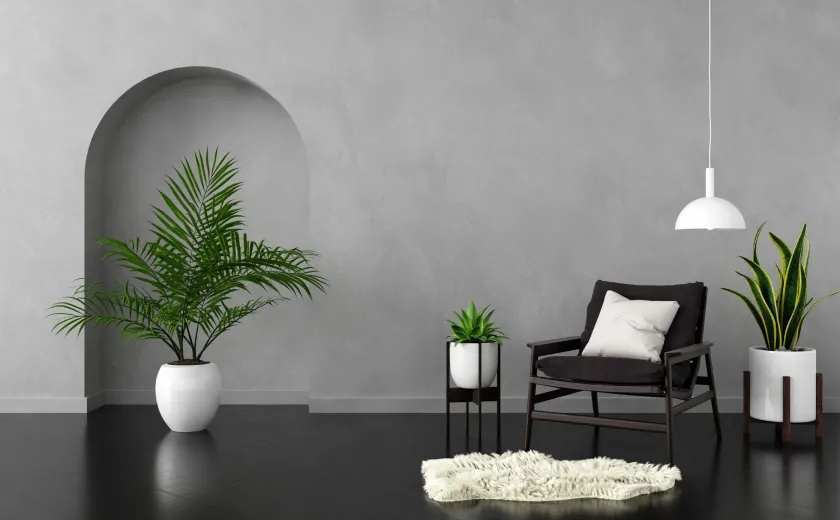
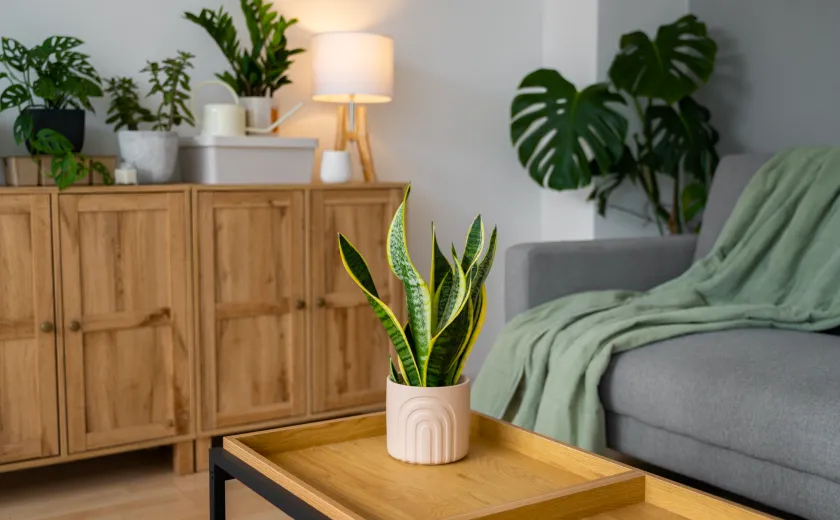
The specific move that characterizes current work is lowering the light. A room lit by lamps at table height, wall fittings at shoulder height and a low pendant over a table feels entirely different from the same room lit from the ceiling, even at the same measured illuminance.
It also photographs better on a video call, which has quietly become a design requirement in every home office we plan.
Nobody thanks you for the lighting design. They just find that they stay in the room longer in the evening, and they usually attribute it to the sofa.
Color temperature, and staying with it
Pick one color temperature for a whole floor and do not deviate. Two thousand seven hundred kelvin is the residential default and is right for almost everything. Three thousand is acceptable in a kitchen or bathroom if you prefer it, but mixing the two within sight of each other is instantly visible and reads as a mistake.
Check the color rendering index too. Below ninety, reds go dull and skin looks gray, and it is the reason some rooms feel subtly unpleasant without anyone identifying why.
Controls, which is where schemes die
The best lighting plan in the world fails if there is one switch by the door. Every layer needs its own control, and the controls need to be where a person naturally reaches.
The simplest effective arrangement in a living room is two circuits: overhead on one, every lamp in the room on a switched socket circuit on the other, both dimmed. You walk in, press one button, and four lamps come on. Clients use that far more than any scene-setting system we have ever specified.
What to do in an existing room
You do not need to rewire to get most of this.
- Take out half the bulbs in the existing downlights and see whether you miss them
- Add two lamps at table height and one dimmer
- Put the lamps on a switched socket so one action turns them all on
- Match every bulb in the room to one color temperature
- Add under-cabinet lighting in the kitchen, which is plug-in and takes an hour
That list costs very little and changes more than repainting would.